


CALL US NOW!
973-506-0060
CALL US NOW!
973-506-0060
Why Some Pools Look Great but Don’t Function Well
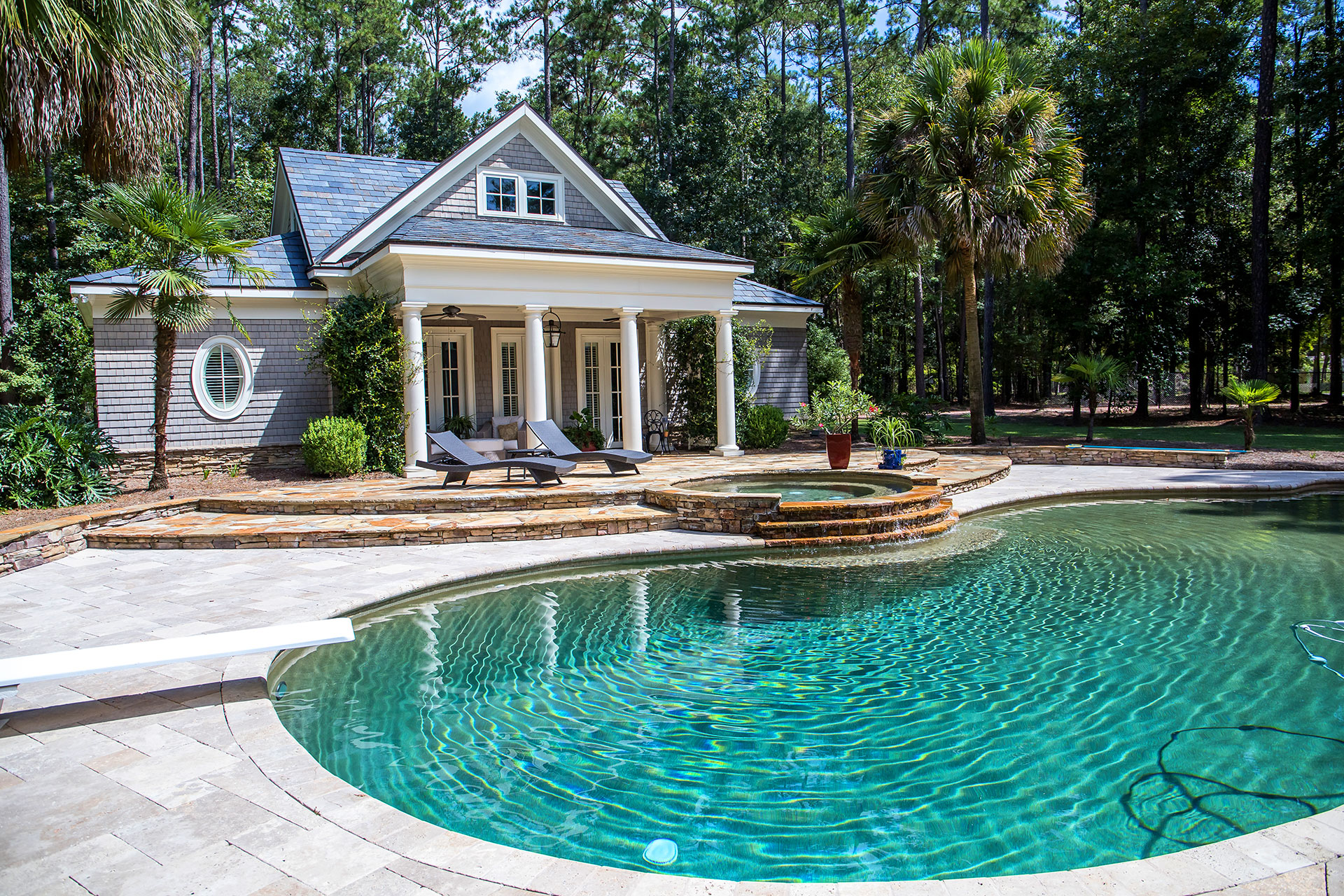
A stunning pool finish, elegant water features, and beautiful tile work. Then you actually use it for a season, and something feels persistently off. The water takes forever to heat. One end always looks slightly hazy. The skimmer runs dry when the wind picks up. The pump sounds like it’s working harder than it should.
Aesthetics and function are not the same conversation. Plenty of pools nail the first and quietly fail the second.
Circulation Design Is Invisible Until It Isn’t
Water that doesn’t move properly doesn’t stay clean. Dead zones, areas where return flow never reaches adequately, become breeding grounds for algae and allow chemical distribution to stay uneven regardless of how carefully you dose the water.
Poor circulation usually traces back to a few consistent mistakes:
- Return jets aimed parallel to the surface rather than angled downward to create depth movement
- Skimmer placement that works against the property’s prevailing wind direction
- Insufficient turnover rate because the pump was sized for cost rather than volume
- Main drain placement that doesn’t contribute meaningfully to floor circulation
A pool can look pristine in photographs while quietly harboring circulation problems that make maintenance a constant battle.
Depth Profiles Are Often Wrong for the Actual Users
Builders sometimes follow standard depth templates without asking how the pool will genuinely be used. A family with young children doesn’t need eight feet of deep end that nobody safely uses. A household of adults who swim laps doesn’t benefit from an oversized shallow wading area that cuts into the useful length.
Depth profiles affect more than safety. They affect heating efficiency, chemical consumption, and how the pool actually feels to swim in.
A pool with too much deep water costs significantly more to heat and treat than one sized appropriately for its real use patterns.
Equipment Undersizing Is a Slow Burn Problem
Nothing in a pool sales presentation highlights the equipment. It’s the part that lives behind a fence, makes noise, and isn’t photogenic. As a result, it sometimes gets value-engineered without buyers fully understanding the consequences.
An undersized filter requires more frequent cleaning and struggles to handle heavy bather loads or debris events. A pump with an insufficient flow rate can’t turn the water volume over adequately, regardless of how long it runs. A heater without proper gas line sizing takes dramatically longer to reach temperature than its rated capacity suggests.
These aren’t catastrophic failures. They’re persistent, low-level frustrations that accumulate across every swim season.
The Surface Finish Affects More Than Appearance
Plaster and finish selection influences water chemistry behavior, surface traction, heat absorption, and long-term durability. A finish chosen primarily for its color or visual texture without considering its porosity, chemical compatibility, or performance in the local climate can create maintenance headaches that weren’t in the original plan.
Darker finishes absorb more heat, which helps in cooler climates and creates problems in hot ones. More porous surfaces harbor algae more readily. Some premium finishes require specific chemistry management to maintain their appearance over time.
Function Is What You Live With Every Day
A pool’s appearance peaks at the photo shoot. Its function is what you experience every morning when the pump kicks on, every weekend when you’re balancing chemistry, every summer evening when it either works effortlessly or demands your attention.
Getting that part right is what separates a pool you love from one you merely tolerate.